Commercial Property Cleaning
Professional sanitation and food safety professionals in Brampton assist food establishments, food centers, baking facilities, warehouses, and food service operations maintaining standards. They decontaminate high-contact points, food preparation surfaces, equipment, floors, drains, restrooms, and food handling spaces with approved chemicals, maintaining proper ratios, and documenting contact times. You require scheduled cleaning determined by hazard level, food throughput, food allergies, and regulatory assessments, along with verification records backing HACCP, audits, and regulatory adherence. The sections below outlines what strong sanitation programs should include.
Essential Summary
- Sanitation technicians in Brampton cater to restaurants, grocery departments, commissaries, warehouses, bakeries, schools, mobile vendors, and allergen-sensitive operations.
- Frequently contacted areas, food-contact equipment, kitchens, floors, drains, restrooms, and storage areas are sanitized using zone-based workflows to avoid cross-contamination.
- Checking of proper chemical concentration, alignment, and exposure duration is performed by trained contractors, with finalization filed using tests, assessments, and action records.
- Regular, periodic, and cyclical operations distributed by location comprise hygiene plans built on threat, production volume, transitions, spills, and requirements.
- Select providers with hazard analysis knowledge, sanitation, knowledge, safety training, instruction, protection, endorsements, colour-coded tools, and assessment-ready sanitation paperwork.
Food Safety Cleaning Requirements for Brampton Venues
Food safety cleaning is required for any Brampton facility that manages, stores, prepares, packages, or distributes food. Apply it to your establishment if it comes under health oversight, food standards, or HACCP systems. This includes restaurants, cafeterias, commissaries, grocery food departments, butcher shops, seafood counters, convenience stores, and institutional kitchens.
You'll also need proper hygiene protocols in supply facilities, manufacturing operations, cold storage warehouses, bakeries, school food programs, reception halls, and delivery services. Portable business models are included, such as food trucks, event sellers, and temporary stalls. If your team handle raw materials, divide prepared dishes, warm finished meals, or maintain allergen storage, your venue requires written cleaning standards. In Brampton, food safety remains required; it comprises legal, operational, and consumer protection compliance.
What Do Brampton Cleaning Professionals Handle?
You need professional cleaners who sanitize high-touch surfaces, kitchen areas, floor surfaces, and restrooms to meet food safety and public health standards. They focus on these spaces because they present the highest risk for contamination spread, slip hazards, and hygiene violations.
By understanding their service scope, you can make sure your facility's cleaning procedures satisfy all operational and regulatory requirements.
High-Touch Surface Sterilization
base sanitization frequency determined by activity levels, infection risk, and how the space is used.
Maintaining a sequential valuable resource workflow, swapping cleaning materials, and organizing cleaning supplies according to section ensures that protocol stays documented, auditable, and inspection-ready always
Cooking Zones, Walking Surfaces, and Restroom Environments
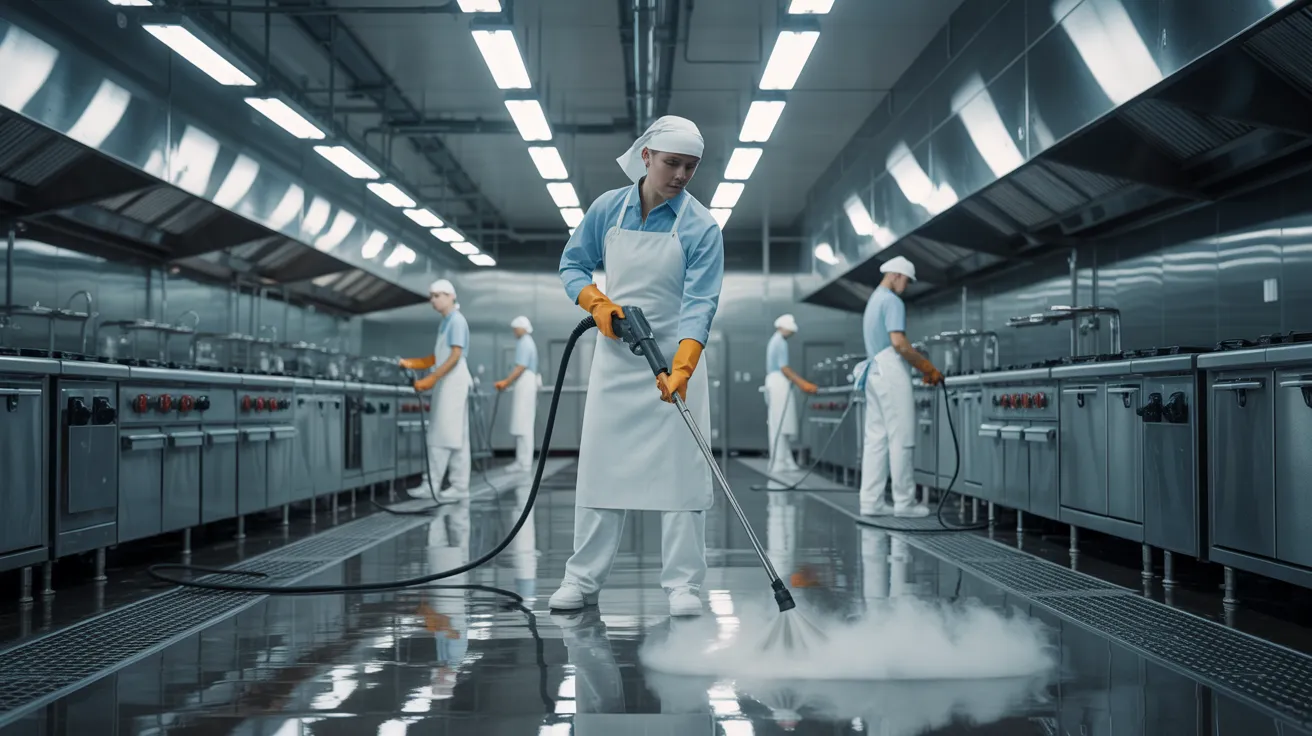
Brampton cleaning services focus on kitchens, floors, and restrooms as each zone presents different food safety, slip-and-fall, and wellness concerns. In industrial kitchens, you need grease removal from cooking stations, appliance surfaces, drain systems, preparation areas, and backsplashes to reduce contamination and pest pressure.
You should also expect documented floor care. is likewise provided as part of the service.
For restroom sanitation, cleaners disinfect high-touch surfaces, bathroom fixtures, stall dividers, supply dispensers, and trash receptacles, then replenish amenities and manage odor. They also maintain restaurant cleaning supply rooms where product storage, sink cleanliness, and drain systems impact daily sanitation standards and worker protection.
Food Safety Cleaning Significance for Brampton Businesses
To adhere to regulatory mandates and succeed in audits, Brampton facilities must maintain appropriate cleaning protocols. You also reduce bacterial spread through proper cleaning of food-preparation surfaces, appliances, and frequently-touched items. Most importantly, you help protect community wellness by reducing the chance of food poisoning in your establishment.
Food Safety Regulations
Food businesses in Brampton face mandatory safety protocols, making food safety cleaning vital to meeting health code requirements, ensuring the safety of patrons, and sidestepping enforcement action. You must maintain hygienic food handling zones, recorded sanitation plans, proper chemical use, and verifiable staff procedures that align with municipal and provincial inspection expectations.
Maintaining well-maintained cleaning files shows due diligence for regulatory audits and confirms that your operations are uniform, replicable, and documented.
Cross-Contamination Prevention
Maintaining regulatory compliance copyrights on your power to stop cross-contamination during daily food handling and cleaning. You need to partition uncooked items from finished dishes, sterilize work zones between assignments, and store chemicals away from food-contact items. Explicit protocols lower contamination threats and support consistent compliance during inspections.
Building allergen isolation prevents key allergens from reaching shared surfaces, containers, or equipment. Leverage separate cutting boards, colored implements, and strict utensil labeling so staff don't mix items during preparation or service.Enforce handwashing after handling raw meat, seafood, eggs, or allergen-containing products. Refresh cleaning cloths frequently, and confirm disinfectant efficacy using test strips. When you train staff to follow these controls every shift, you foster a cleaner, more secure operation that meets Brampton's food safety expectations consistently.
Community Health Protection
Should cleaning standards break, you don't simply risk a failed inspection—you expand the odds of contamination-related sickness harming customers, staff, and the wider Brampton population. You also undermine your responsibility in protecting public health, especially in busy food facilities where contamination can spread quickly through surfaces, equipment, and touchpoints.
You require sanitation systems that eliminate soils, sanitize effectively, and validate outcomes. This involves maintaining exposure durations, selecting approved disinfectants, logging schedules, and coaching employees to meet regulatory requirements. These controls promote illness spread by minimizing pathogens before contaminating food or hands. Throughout Brampton, strong cleaning safeguards susceptible populations, minimizes disease potential, and demonstrates accountability. When you follow proper protocols, you go beyond requirements—you mitigate risk and facilitate secure food handling region-wide.
In What Ways Does Cleaning Help Achieve Food Safety Compliance?
Maintaining rigorous cleaning routines promotes food safety compliance by decreasing contamination threats, managing pathogen expansion, and keeping your facility meeting sanitation requirements under HACCP-based programs and public health regulations. You verify that food-contact surfaces remain visibly clean and microbiologically controlled, backing documented preventive controls and inspection readiness.
Cleaning initiatives additionally upgrade allergen control by removing residues that can cause undeclared allergen exposure.
What's the Right Time to Schedule Commercial Cleaning?
everyday regular cleaning
Schedule drain systems, vents, storage racks, and difficult-to-access zones every week or every month, based on inspection data and sanitation records.
Finding Quality Brampton Cleaning Experts: A Guide
Screen providers initially by their food-safe sanitation requirements—not budget alone. You need to confirm that every company meets CFIA, public health, and HACCP standards for your operation. Demand proof of insurance, WHMIS compliance, training records, and management systems. Evaluate technician knowledge of cross-contamination risks, chemical safety, and documented sanitation practices.
You should also assess business dependability and accountability. Request references from Brampton food businesses, then examine turnaround periods, corrective actions, and communication standards. Confirm the company participates in supplier audits and can present inspection-ready documentation when regulators or third parties request evidence. Check whether equipment is maintained is performed, color-coded implements are used appropriately, and facility-specific risks are recognized. A competent service protects compliance, product quality, and your brand reputation.
Which elements are contained in a hygiene cleaning program?
Develop a written plan that clarifies every sanitation task, standard, and responsibility prior to production start. You should detail cleaning schedules, authorized chemicals, concentration levels, contact duration, implements, and validation techniques for each zone, surface, and piece of equipment. Incorporate pre-operational inspections, corrective actions, and employee training requirements.
Your strategy should also focus on cross-contamination controls, waste handling, pest-prevention measures, and documented schedules for restrooms, drains, floors, and food-contact areas. Detail how you'll separate raw and ready-to-eat processes, facilitate ingredient tracking, and maintain accurate allergen labeling through validated cleaning between product changes. You should set accountability, maintain signed records, and assess results against regulatory standards, HACCP controls, and customer requirements. When gaps appear, update procedures immediately and retrain staff.
Frequently Asked Questions about the Plan
Do sanitation providers operate during nighttime hours at Brampton properties?
If you operate controlled facilities, you'll also need documentation that support inspections and maintain compliance.
Can Brampton cleaning experts manage hazardous incidents?
Yes, you can find Brampton sanitation professionals to offer hazard containment services. They manage hazardous materials, evaluate dangers, isolate affected areas, and begin swift cleanup to minimize risk and business interruption. You should verify arrival timeframes, professional credentials, safety procedures, and disposal procedures. If your facility must meet health or food safety regulations, choose a provider that records events, maintains regulatory procedures, and enables compliance verification.
Will plant-based disinfectants disinfect safely food-handling equipment?
Definitely, plant-based sanitizers work safely on food preparation areas if you purchase items marked food-safe that meet compliance requirements. You should check contact duration, mixing proportions, and rinse procedures ahead of deployment. Botanical formulations reduce harsh chemical exposure, but you need demonstration of efficacy against relevant pathogens. To preserve residue-free areas, implement precise manufacturer instructions and verify your sanitizer adheres to applicable food industry sanitation standards.
Can maintenance plans adjust with seasonal shifts?
Yes, you can customize maintenance plans for seasonal production changes. You should revise frequencies, personnel, sanitizers, and confirmation procedures to align with seasonal patterns while sustaining compliance standards. You'll decrease production downtime by organizing disinfection around line changes, high demand periods, and usage patterns. You should additionally revise procedural documents, employee training, and environmental testing to address periodic risks, additional allergens, or elevated soil levels. Ongoing evaluations preserve your plan current.
Will professional cleaning services teach your staff on sanitation best practices?
Certainly, commercial cleaners train your employees on sanitation best practices. You obtain staff training on correct chemical practices, processing times, cross-contamination prevention, equipment disassembly, and documentation. They generally coordinate coaching with HACCP, GMP, and CFIA or local public health requirements. Many also run health assessments to check standards, identify gaps, and reinforce corrective actions. This helps you copyright standard processes, satisfy audits, and minimize foodborne pathogen risks daily.
Final Thoughts
When you partner with Brampton commercial cleaning and food safety specialists, you don't just tidy up—you maintain your facility inspection-ready and your protocols compliant. From kitchens to processing floors, every clean surface and well-kept corner helps reduce pest intrusion and avoid expensive problems. By arranging cleanings at the proper frequency and following a clear cleaning plan, you safeguard staff, patrons, and your brand image. In a tightly regulated environment, sanitary conditions aren't optional—they're fundamental to proper operations.